Resilience, Restoration & Re-Creation: Finding Peace and Inspiration Through Life’s Challenges


Dawn Rays in Woodland
This week marks my six year anniversary of contracting Long Covid. I chose to focus on what I have gained, rather than what I lost. Disability has altered the course of my life and taught me important lessons about resilience, restoration, and re-creating myself. What first felt like insurmountable hurdles gradually became stepping stones, leading me to deeper self-awareness.
Below are some of the lessons I’ve learned while riding the rollercoaster of life. You may already know many of them. Some may sit quietly in your subconscious. Others may feel entirely new. All of them, however, can be difficult to practise consistently.
This is as much a personal reminder to pause and reflect as it is a collection of insights that may support you or your loved ones on your own journey toward resilience.


Frozen Canal with Autumnal Colours
Embrace Acceptance
Faced with a challenge, it’s natural to enter fight, flight, or freeze mode. You may want to battle the problem, run from it, deny it, or search for a miracle solution. While these reactions serve a purpose, I’ve found that sitting in acceptance is often beneficial.
Don’t run. Don’t hide. Stay present in the discomfort and gently face your fear. Observe the situation — and observe your response to it. Acknowledge that your life is changing.
Acceptance is not giving up. It is a gateway to peace. It creates space for healthier choices and clearer thinking.

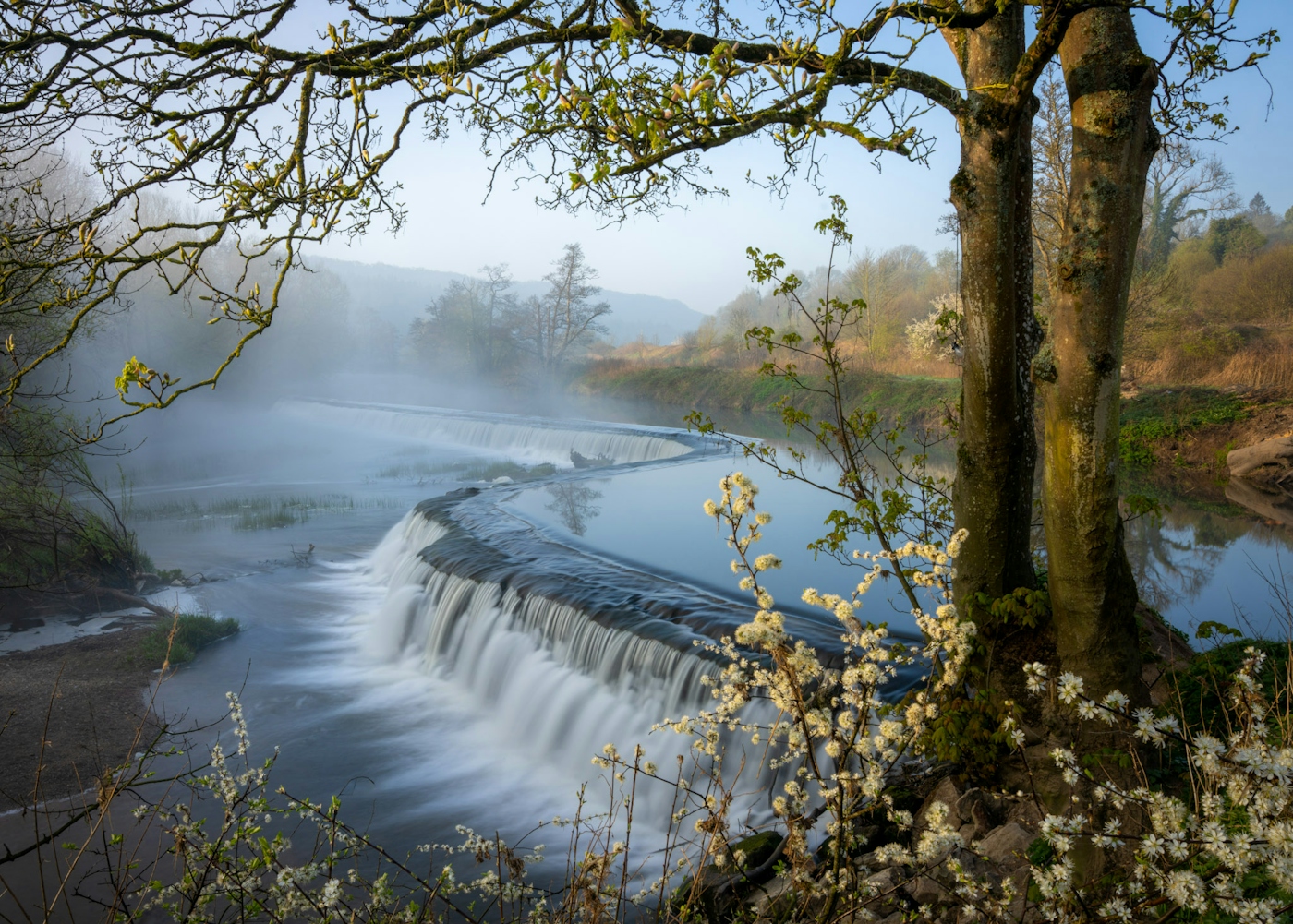
Winding Weir with Spring Blossom
Live in the Moment
Depression often comes from dwelling on the past, while anxiety is usually rooted in worries about the future.
One of the most powerful ways to regain balance is to focus on the present moment. By bringing your attention to the here and now, you can ground yourself, calm your mind, and reduce the weight of past regrets or future fears.


Dramatic Skies Around Lighthouse as the Sun Set
Choose Groundedness Over “Success”
Society trains us to chase success. But success is frequently defined by comparison — measuring ourselves against other people’s expectations.
Status. Wealth. Influence. Social media validation. Body image.
Groundedness invites us to release external expectations and focus instead on our values and what helps us feel calm, centred, and content.
Striving solely for success can create restlessness and dissatisfaction. Striving for groundedness cultivates peace and clarity.


Pink Sunrise Skies
Gain Perspective
Our brains are wired to detect threats. Left unchecked, those threats can become exaggerated in our minds.
Pause. Breathe. Step outside your own internal narrative.
Stop placing yourself at the centre of everything and consider the wider landscape. Sometimes, feeling small within a vast world is freeing rather than frightening. Perspective softens anxiety and reminds us that challenges, while painful, are often temporary.


Winding Path through the Forest
Reframe Your Thoughts
You cannot control everything that happens around you — but you can influence how you interpret it.
Reframing doesn’t deny pain. Instead, it asks: Is there another way to see this?
Within suffering, there can also be growth. Within loss, there may be transformation. You cannot turn back time, but you can decide who you become moving forward.
That choice can create calm.


Deer in Lavender
Find Meaningful Connection
We are often told that humans are social animals — and connection does regulate our nervous system and help us thrive. But not everyone is wired the same way, and not everyone has equal access to traditional support networks.
Connection doesn’t have to look conventional.
It may be found in online communities, or in the quiet companionship of nature and wildlife. The key is finding connection that feels safe and nourishing to you.


Sun Bursting between Branches and through Misty Rays
Accept Failure as Part of Growth
Failure is unavoidable. We will disappoint others at times. We will fall short of our own standards. We will make mistakes. That is part of being human.
Failure is not proof of inadequacy — it is evidence of being human.
I know I will fail to remember these lessons when life feels overwhelming. The goal is not perfection; it is reflection and growth.


Autumnal Canal
Practise Self-Compassion
We are often kinder to others than we are to ourselves. Imagine speaking to yourself the way you would speak to someone you love. Offer yourself patience. Offer understanding. Offer encouragement.
Self-compassion strengthens resilience. Harsh self-criticism erodes it. Be your own ally.


Glastonbury Tor in the Misty Sunrise
Observe Yourself Without Judgement
Self-awareness is transformative. Take time to observe your thoughts and emotions without labelling them as good or bad. Become curious. What triggers anxiety? What brings calm? What patterns repeat?
The more deeply you understand yourself, the more intentionally you can respond — rather than react. Observation creates choice. Choice creates empowerment.


Moody Canal
Restore Your Energy
Resilience requires restoration.
Discover what replenishes you physically, emotionally, and mentally. For some, it’s creative expression. For others, it’s movement, sport, mindfulness, or time in nature. Sensory experiences such as massage, breathwork, or even ASMR may soothe your nervous system.
There is no universal formula. Restoration is personal. What energises one person may exhaust another. Listen carefully to your own needs.


Hoovering Dragonfly
Embrace Your Animal Nature
At our core, we are animals. When we meet our biological needs we often feel calmer and more content.
Modern life demands intense cognitive effort: constant digital engagement, multitasking, commuting, and information overload.
Returning to simple activities — walking outdoors, breathing deeply, observing wildlife — can regulate our system in beneficial ways.
Nature restores what overstimulation depletes.


Church Rising through the Mist
Allow Yourself to Feel
Sadness, anger, frustration, grief — these emotions exist for a reason. Suppressing them often intensifies suffering. Allowing yourself to feel them, without becoming consumed by them, is healthier.
Emotions are meant to move through you. Let them flow through you rather than trapping them inside.
A Final Reflection on Resilience
These principles may sound straightforward, even obvious. Yet during times of stress or crisis, they can feel surprisingly difficult to practise.
I still struggle to apply them consistently. But when I do, I’m reminded of something important: resilience is not about being unbreakable. It is about bending, learning, restoring, and re-creating yourself again and again.
It’s also important to acknowledge that not all struggles are equal. If you are fighting for basic survival — access to food, water, shelter, safety, healthcare, or employment — your burden is heavier. Our journeys do not begin from the same starting point.
Resilience looks different for each of us. And sometimes, simply continuing is enough.